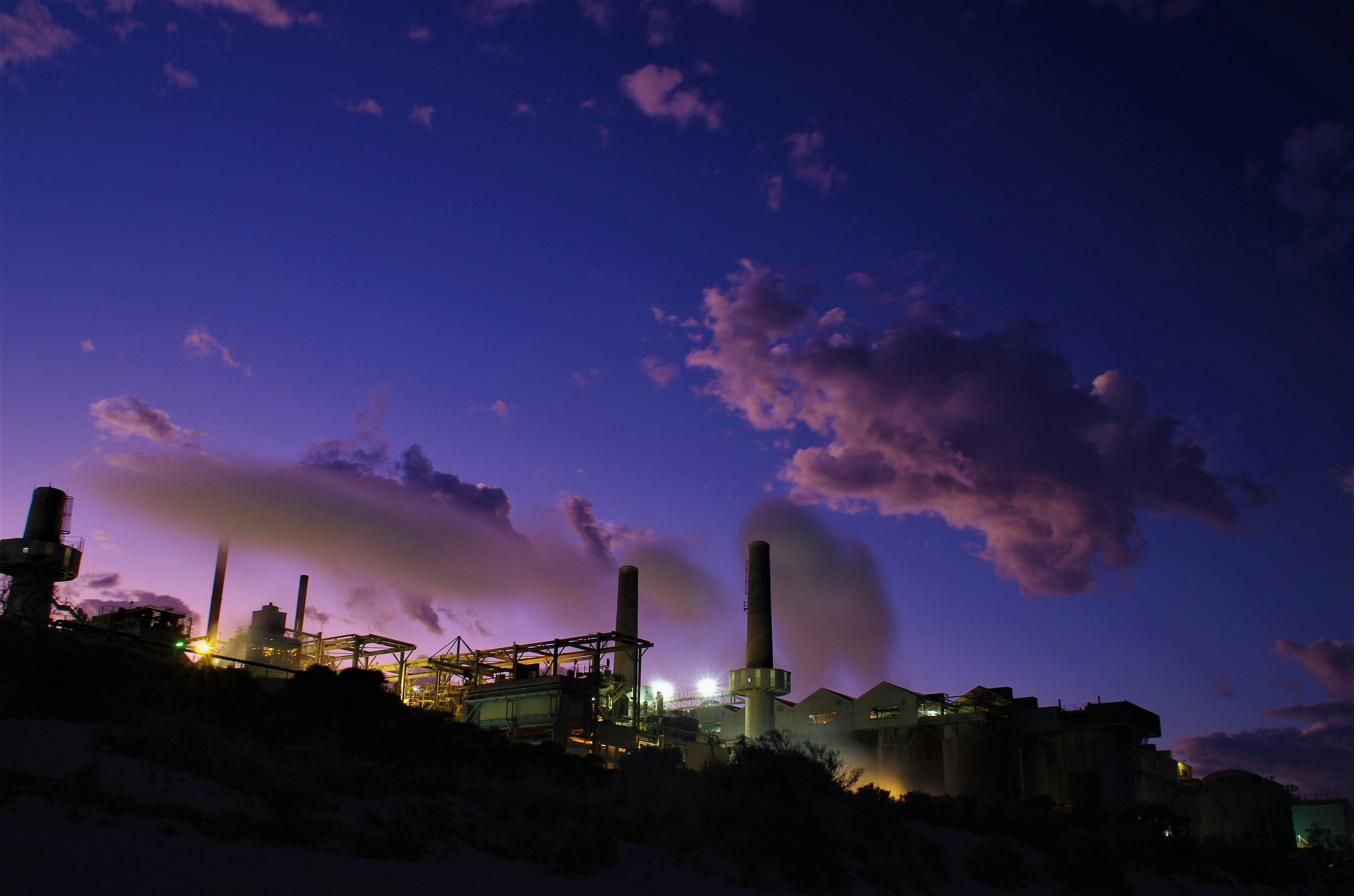
See the whole system before you commit the capital.
Individual projects are being funded faster than anyone is sequencing the system those projects rely on. Circular Ecosystems is the decision intelligence engine that models the whole system first, so the money lands in the right order.
The projects are sound; the system underneath them isn’t sequenced yet.
Public money gets committed to a smelter, a hydrogen plant, or a processing node before anyone has mapped the shared infrastructure, the feedstock, and the governance those projects actually depend on.
When the system can’t receive the project, the value strands. No subsidy fixes that after the fact, because density and distance get locked in the moment the land is allocated.
 When a project arrives, can the system receive it?
 Four things become true once you can see the whole system.
Capital sequenced in the right order
Which decisions have to land before others become explicit, so funding follows the dependency chain instead of fighting it.
Stranded-asset risk priced before you commit
Every proponent gets tested against the system it plugs into, so the exposure is visible while it’s still time to change.
Shared infrastructure costed across projects, not duplicated
Common-user facilities get sized for the precinct, not rebuilt four times over by four proponents who never spoke to each other.
Governance designed before the concrete is poured
The authority to act on an opportunity exists at the point you find it, not two years and one stranded asset later.
Reveal. Shape. Monitor.
Three layers, in sequence. The plan can’t drift from the data, and the operating layer can’t drift from the plan.
Intelligence engine.
Quantifies cascade exposure, carrying capacity, contamination risk, and stranded-asset exposure before capital commits. Persona views run from the operator on the floor up to the minister signing the cheque.
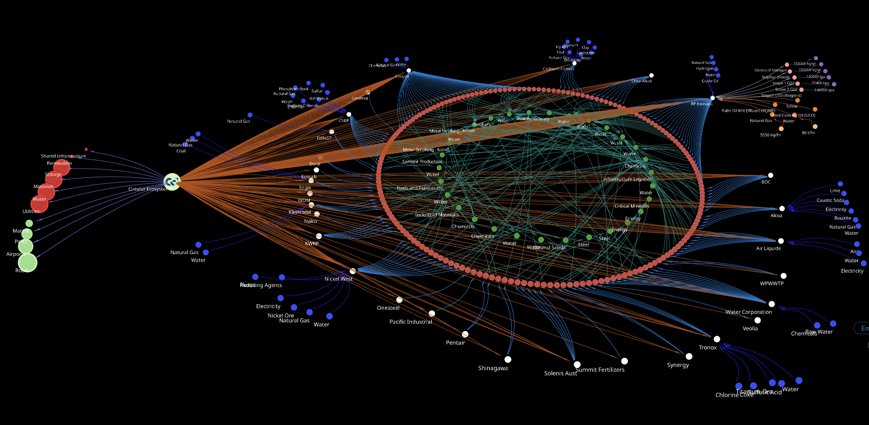 SYSTEM LEVEL UNDERSTANDING
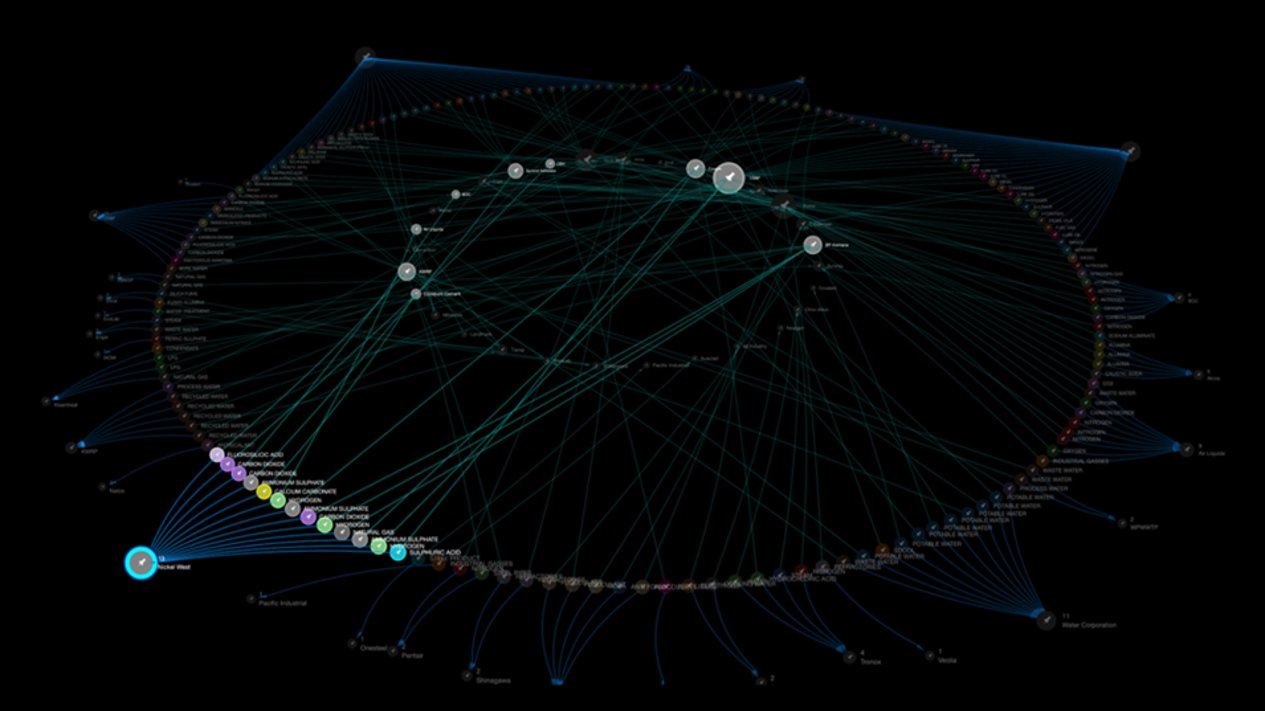 PROPONENT IMPACT
 Transition blueprint.
Builds the governance, the sequencing, the tenant logic, and the capital architecture that stands up to board, regulator, funder, and auditor questioning.
Operating intelligence.
Watches the live ecosystem against the operating envelope and the cascade register, and flags drift from the governance commitments the blueprint locked in. The layer runs on a federated, interoperable data space, so each operator keeps custody of its own data while the whole system still reads as one.
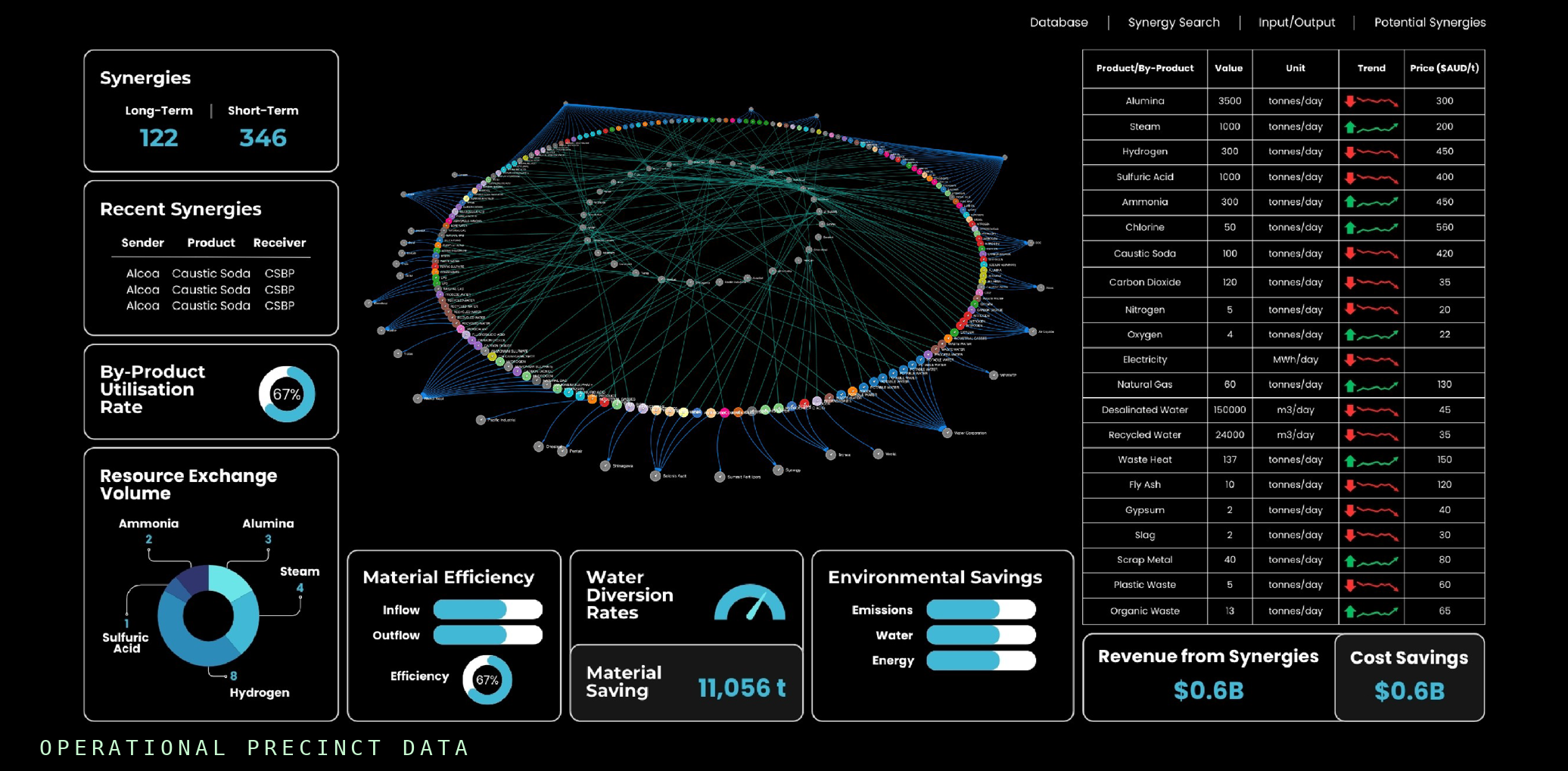
Each layer feeds the next. Reveal sets the envelope, Shape sets the plan, Monitor keeps both honest.
 One precinct, seen as a system
 Circular Ecosystems learned this the expensive way.
Circular Ecosystems started as an exchange platform at Kwinana, matching one operator’s by-product to another operator’s feedstock. The matches were real and the value was real, but nobody held the authority to act on them, so most of them died in a spreadsheet.
The firm rebuilt the whole approach upstream, around the decision and the governance, because that is where the value actually leaks.
the precinct
already running
Two decision makers. One problem to sequence.
Different chairs, the same underlying call: what has to happen first, and what breaks if it doesn’t. Pick the seat that fits.
Departments and agencies committing public capital to industrial transition, who need the sequencing right before the money goes out the door.
Bring the pipeline → See our services →- Which projects in this pipeline depend on infrastructure that doesn’t exist yet?
- What’s the cascade exposure if the anchor proponent slips by two years?
- Where does this capital strand if the system can’t receive the project?
- What governance has to be standing before the first dollar moves?
Regions and precincts trying to land several projects at once without duplicating infrastructure or stranding the ones that arrive first.
Map the precinct → See our services →- Can the precinct actually carry every project that’s been announced?
- What shared infrastructure are four proponents about to build four times over?
- Which tenant has to land first for the rest to pencil out?
- Where should land get allocated so symbiosis stays possible later?
Built for the heavy end of the economy.
The method is sector-agnostic; the work isn’t. These are the systems where sequencing, carrying capacity, shared infrastructure, and distance decide who gets built and who strands.
Critical minerals
Processing and refining, and the shared infrastructure that decides whether a deposit becomes a supply chain.
Defence
Sovereign industrial base and materials security, and the precincts that have to hold under stress.
Chemicals
Feedstock and by-product recovery, and the exchange economics that run across the fence line.
Energy
Low-carbon fuels and grid headroom, and the load that every other project quietly depends on.
Agriculture
Inputs and processing, and the water and logistics that set what a region can grow into.
Logistics
Ports and corridors, and the distance arithmetic underneath every commodity that moves.
A decision intelligence engine for the calls that lock in before anyone can change them.
Circular Ecosystems sits at the system level, between the operators, the regulators, and the capital. These are the principles the firm runs on, set before the first engagement.
The analysis answers to the system, not to any single client
Governance before infrastructure, every time
System before project
Density and distance are strategic levers
Specific numbers, named entities
Documentation that carries four decision makers at once
One team. One operating principle.
Stephen McGurk
Director, Strategy
Founding Director and co-architect of CE's whole-of-systems governance, which sequences decisions ahead of infrastructure commitments across industrial precincts and regional corridors. Leads CE's engagements with state agencies and senior government, with a background across program management, regional development, and the institutional design that holds multilateral arrangements together.
Cited, WEF 2025 · industrial cluster digitalisation Cited, WEF Intelligent Industrial Ecosystems · August 2026Ashley Olsson
Director, Industrial Circularity
Founding Director and international circular economy expert with a background across megaprojects, industrial symbiosis design and regional system strategy. Leads CE's analytical methodology and system-level engagements, including operator network analysis, material flow inventory and cascade modelling. Advises ASX-listed companies.
David Hicks
Director, Operations
Founding Director with a background in carbon capture and utilisation technology and complex multi-party programs. Leads CE's operations, financial control and government delivery, including the governance structures and cost recovery design that keep the multilateral funding model standing up. Advises private and ASX-listed companies.
Lauran Huefner
Director, South Australia
A background in supporting emerging technologies — digital twins, hydrogen, quantum — grow and find opportunities. Focussed on regional development and the opportunities to advance industrial capability and decarbonisation through engaging stakeholders across the public, private and research sectors.
Kate Shaw
Strategic Partner, Regional Delivery
Regional project delivery and funding alignment across Western Australia's South West, with a background across wastewater and biosolids reuse, environmental approvals, regional government leadership as Acting CEO of Bunbury Harvey Regional Council, and contribution to the National Circular Economy Framework.
External counsel on the calls that matter.
Independent perspective drawn from outside the day to day of engagement delivery, brought in on positioning, technical direction, and the decisions that carry weight beyond a single client.
Jason Crusan
Advisory board
Large scale technology governance and program architecture, with a background spanning NASA's Artemis Program and Lunar Gateway architecture through to energy strategy at Woodside and independent technology advisory.
Jackie O'Dowd
Advisory board
Systems governance and complexity leadership for organisations navigating multiple interdependent parts, with a background founding and leading Realising Potential and advising government, healthcare, and industry.
Dr Chris Oughton
Advisory board
Industrial symbiosis and precinct governance built across 17 years as Chief Executive of the Kwinana Industries Council, with a background coordinating fifty plus co-located industries and developing the KIC4 evaluation model.
Vinnie Nici
Advisory board
Khora's architecture and the data infrastructure that keeps the analytical work reproducible, with a background across data architecture and the engineering discipline that turns analysis into an operating engine.
The working papers behind the method.
Each paper isolates a single structural problem in industrial transition and traces it through to the decision it should change. The summaries are published openly; the full papers go to qualified decision makers on request.
The Independent Orchestrator
Why most regional industrial systems have no functioning coordination function, and the four conditions that would create one.
Request the paper → Working paper · WP-02Why Advisory Firms Can’t Orchestrate
The structural reasons a firm that sells the next phase of advice can’t hold the coordination role at the same time.
Request the paper → Working paper · WP-03Strategic Land Allocation
The upstream decision that quietly determines every downstream investment a precinct can ever attract.
Request the paper → Working paper · WP-04Governance Before Infrastructure
The preconditions and the sequencing that keep an orchestration model from failing on first contact.
Request the paper → Working paper · WP-05Density and Distance
The geometric variables that decide whether industrial symbiosis is viable before any subsidy gets written.
Related: Carrying Capacity AssessmentRequest the paper → Working paper · WP-06Cascade Exposure
The risk class nobody is pricing, which stays hidden right up until one failure propagates across the system.
Related: Carrying Capacity AssessmentRequest the paper → Working paper · WP-07Funding Architecture Failure
How the current public funding model keeps producing the exact outcomes it claims to be solving.
Related: Funding Architecture ReviewRequest the paper → Working paper · WP-08Accountability Infrastructure
Holding coordinated industrial systems to the commitments they made on the day the money went out the door.
Request the paper → Working paper · WP-09The Sequence Model
A structural model for sequencing the decisions that keep an industrial system on track.
Explore the model →Circular Ecosystems also writes targeted briefings for a single decision context, inside government departments, regulators, regional authorities, and major operators. Name the decision in front of you and the paper that fits it comes back.

Sequence your precinct before you commit.
Whether you are committing capital to a pipeline or allocating land for a corridor, the sequencing has to match the system. Let’s run the numbers.
Perth, Western Australia
Inquiries: hello@circularecosystems.io